Stream Cheating: The Honest 2026 Guide to Watching Ahead of Your Partner
Why \"just one episode without me\" feels worse than it sounds, what the Netflix data actually says, and how couples in 2026 recover the shows they ruined.
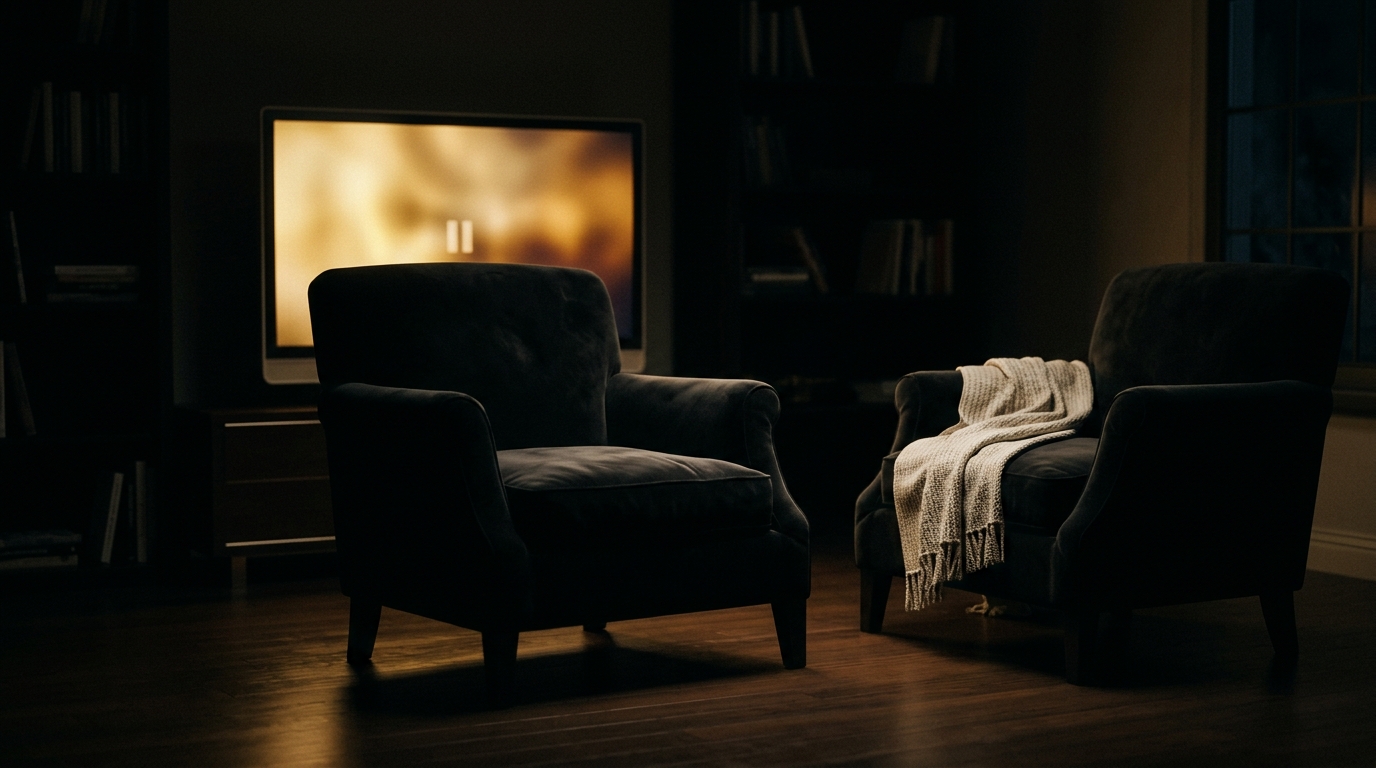
The first time you realise your partner stream-cheated on you, it isn't even a big moment. You sit down on a Tuesday, ready to press play on episode four. They sit down too, slightly too quickly, and there's a half-second of hesitation when the cold open hits. They already know what happens. You can feel it in the way they don't react. And the rest of the episode is fine, but it isn't with them anymore. They are watching you watch it.
This is the small, weirdly specific betrayal that streaming culture invented and that nobody had a word for until Netflix gave us one. They call it stream cheating. Forty-six percent of couples have done it. Forty-eight percent of partners admitted to it in a 2017 global survey, up from twelve percent in 2013. Whatever you call it — watching ahead, sneak-watching, episode infidelity — it's now the most common low-grade conflict in modern couples who watch TV together. And it's worth taking more seriously than people usually do.
We've spent two years running WatchNest rooms for couples who watch shows together. The patterns in apology messages are consistent, and the patterns in what actually fixes it are too. This is the honest version.
Why "I just watched one without you" feels worse than it should
The instinct, when called out, is always to minimise. "It's a TV show. It's not a big deal. I'll just rewatch it." The instinct is wrong, and almost everyone on the receiving end could tell you why.
Co-watching is one of the very few low-cost shared rituals modern couples still have. You don't write letters anymore. You don't go to weekly church. You don't share most meals if you both work. The Tuesday-night episode of the show you're both into is, statistically, the longest stretch of uninterrupted, shared, no-phones-out attention many couples get all week. When one of you watches ahead, you didn't just consume content. You drained a finite resource. There were six episodes left in the ritual; now there are five.
The other reason it stings: the reactions are the thing. Watching a prestige drama is interesting alone. Watching it with someone you love is different alone — you see them tense up at the same beat, you both laugh at the same line, you both go "oh no" out loud at the cliffhanger. When your partner already knows the cliffhanger, they can't fake the gasp convincingly, and you both know it. The experience is ghosted. They're a TV show ahead and an emotion behind, and there is no version of "let's pretend you didn't" that gives the moment back.
The minimum acceptable response when caught is not "it's just a show." It's "I get why this is annoying." That single sentence, said before any explanation, saves about 80% of the fights.
The three flavours of stream cheating
Not all stream cheating is the same, and the right repair depends on which kind happened. We see three.
1. The accidental
The autoplay rolled. You looked up from your phone and three minutes of episode five were already playing. You got bushwhacked by Netflix's UI choices. This is the most common form and the least serious, yet the one couples fight about most because "I didn't mean to" sounds like a flimsy excuse even when it isn't.
The fix is structural. Turn autoplay off (Netflix → account → playback settings → uncheck "Autoplay next episode"). It takes ten seconds and removes 60% of accidental stream cheating from your life. The single highest-ROI relationship intervention of the streaming era.
2. The "just one"
You couldn't sleep. They were already in bed. You told yourself one episode wouldn't hurt. Then it was two. This is the most morally fraught flavour because the intention was clean — you weren't trying to skip ahead, you were just bored at 1am — but the result is the same. Five episodes left has become three.
The "just one" usually comes from a real signal: the show is moving too slow for one partner, and they want to power through. That signal is worth listening to, not punishing. Sometimes the answer is to acknowledge that this particular show is solo viewing for one of you and pick a different shared show for the ritual. Watching every show together isn't a relationship rule; it's just a habit you can renegotiate.
3. The revenge watch
This one's spicier. You're annoyed. Your partner cancelled date night, or didn't ask about your day, or watched ahead on a different show last month. You watch the next two episodes on purpose, alone, knowing they'll find out. This isn't really about TV. The show is a proxy for a conflict you haven't had directly.
If you're doing revenge watches more than once, the show is not the problem. Have the actual conversation. Watching prestige TV out of spite is a bad look at any age.
The "no spoilers" rule isn't the answer
The most common response when stream cheating becomes a recurring issue is to negotiate a "no spoilers" pact. You can watch ahead, but you can't tell me what happens. You'll re-watch with me and act surprised. This sounds reasonable. It does not work.
It doesn't work because, as covered above, the value of co-watching isn't the plot. It's the live reactions. Once you know what's coming, your face is doing maintenance work — you're managing how surprised to seem, when to gasp, how much eye contact to make at the twist. Your partner can tell. They can always tell. The "no spoilers" rule preserves the information asymmetry while destroying the emotional reciprocity, which is the whole point.
The better rule, in our observation, is one of two things:
- The watch-together rule: for shows you've agreed are shared, you don't watch ahead. Full stop. If you're worried you'll be tempted, don't have them in your continue-watching list. Use a separate profile or a different platform for solo viewing.
- The release-from-rule: if one of you genuinely needs to power through a show solo, you say so before doing it. "I want to finish season two on my own; let's pick a different one for Wednesdays." This isn't cheating; it's renegotiation. The transaction is done in daylight, and the next ritual gets chosen deliberately.
Both rules work. The "no spoilers" middle path doesn't, because it tries to preserve the appearance of co-watching after the substance has been emptied out.
The repair conversation
If you've been caught — and you will be, because everyone who watches ahead is bad at hiding it — the repair conversation has three moves, in order.
Acknowledge the substance, not the technicality. Don't say "I only watched twenty minutes." Say "I watched ahead of you, and I know you wanted to see this together." The number of minutes is not the issue. The breaking of the agreement is.
Name what you'll do differently. "I'll turn off autoplay" or "I'll not put it on when you're not here" or "I want to talk about whether we should still be watching this together." Specific, not vague. "I'll be more careful" is not a plan.
Don't ask for forgiveness in the same conversation. This is the move people get wrong. They want to be told it's okay so they can stop feeling guilty. Resist. Let your partner sit with the annoyance for a day. The next time you watch — with no further commentary — is where the trust gets rebuilt. Words don't fix this. The next quiet, present Tuesday-night episode does.
We've heard versions of this conversation a thousand times in the feedback we get from couples using WatchNest. The shape is always the same. The ones who handle it well skip the defensiveness. The ones who don't escalate it into a thing about whether the relationship is taken seriously, which is almost never what it's actually about.
How synced viewing prevents 90% of the problem
The cleanest fix for stream cheating isn't a rule. It's an architecture. If watching the show requires you both to be in a synced room, the temptation to sneak ahead is removed by friction. You can't physically watch episode four without your partner being there if "watching episode four" means "we're both in the WatchNest room with episode four cued up."
This is one of the under-discussed upsides of co-watching tools in 2026. Most articles frame them as solutions for long-distance couples. They're equally useful for same-roof couples who keep stream-cheating on each other and want to stop. The room becomes the artifact of the ritual. If the show is "ours," it's the room or nothing.
What makes this work better than a rule:
- Rules require willpower at the moment of temptation. Architecture removes the temptation upstream. You can't break a rule about watching ahead if the act of watching is, by default, tied to your partner being present.
- It makes async viewing explicit. If you genuinely want to watch a show solo, you do it on your own profile, on your own time, and you don't pretend the shared ritual still exists for it. The room either gets booked or it doesn't.
- The friction is low for the right thing. Two clicks to start a co-watch is fine. The friction is in solo-watching a "shared" show, which is exactly what should be hard.
This isn't a pitch. The free WatchNest tier covers couples; we'd say the same thing about Teleparty or any equivalent tool — and the comparison page lays out the differences if you're picking. The point is that the structural fix outperforms the rule-based fix every single time.
A note on the binge-watch era
Worth saying directly: stream cheating is more common now than in 2013 not because people are worse partners, but because streaming trained everyone to lose patience for unfinished narratives. The drop-the-whole-season model made waiting an active choice rather than a passive one. Asking adults to choose delayed gratification while the entire app is engineered to maximise immediate consumption is a losing battle.
Your partner isn't a worse person than your parents were. They're operating inside a system designed to break the impulse control that made shared TV-watching work in the first place. The fix isn't shame. The fix is to design rituals that don't require willpower to maintain — which is exactly why "no autoplay + a shared room + a fixed weekly slot" outperforms "trust me, I won't watch ahead." Same outcome; the difference is whether you're winning by character or by architecture. Pick architecture.
Common questions
My partner stream-cheated and won't apologise. Now what? Decide whether the show is recoverable or not. If yes, drop it as a shared ritual and pick a new one together. If no — meaning the breach was part of a pattern, not a one-off — the conversation isn't about TV. Don't have it about TV.
Is it stream cheating if I watch ahead on a show my partner gave up on? No, assuming you've both acknowledged they've dropped it. Get the acknowledgment first, though, so there's no ambiguity later.
My partner falls asleep every episode and we never make progress. Am I allowed to watch ahead? You're allowed to renegotiate. Have the conversation: this show isn't working as our shared ritual. Pick a shorter one, or a different time, or accept that this particular show is yours. Don't sneak — switch.
What about rewatches? Can I rewatch our show alone? Yes, with one caveat: don't bring it up during the next joint watch. Rewatching solo and then "noticing things" out loud during the shared rewatch is a stream-cheating-adjacent crime. Keep your solo viewings to yourself.
Does this apply to same-roof couples or just long-distance? Both. Long-distance couples actually stream-cheat less in our data — the friction of arranging the call already commits them. Same-roof couples are the more common offenders precisely because the show is available on the living-room TV at any hour.
The real fix is treating the ritual seriously
The closing thought: stream cheating is a small offence that signals a larger thing. It signals that the shared ritual isn't quite valued enough to defend against the autoplay button at midnight. The fix isn't a rule, or a guilt trip, or a promise to be better. It's deciding, explicitly, that the Tuesday-night episode is the kind of thing you protect on purpose — like you'd protect a dinner reservation or a friend's birthday.
The couples we see do this well don't make a big production of it. They just have one show that's theirs, one slot that's protected, and a quiet understanding that the show happens in the room and only in the room. They turned autoplay off. They have a different show for solo viewing. They named the agreement out loud once and now don't have to think about it.
Stream cheating ends, in the end, the same way most low-grade relationship friction ends: by being taken seriously enough to design a system around, and not seriously enough to fight about. The show is small. The ritual isn't. Defend the ritual; the show takes care of itself.
Start your private watch party
Free for two viewers, premium for groups. Synced playback, chat, video calls — all in one extension.
Read next
How to Watch Reality TV Together Long Distance in 2026
Love Is Blind drops, Bachelor watch parties, group-chat spoilers, and the dating-show ritual that actually holds. Honest field notes for long-distance couples.
How to Watch K-Dramas Together Long Distance (2026 Guide)
Weekly Viki drops, 16-episode commitments, time zones, and the subtitle problem. The honest 2026 guide to watching K-dramas with your partner long distance.