How to Watch Reality TV Together Long Distance in 2026
Love Is Blind drops, Bachelor watch parties, group-chat spoilers, and the dating-show ritual that actually holds. Honest field notes for long-distance couples.
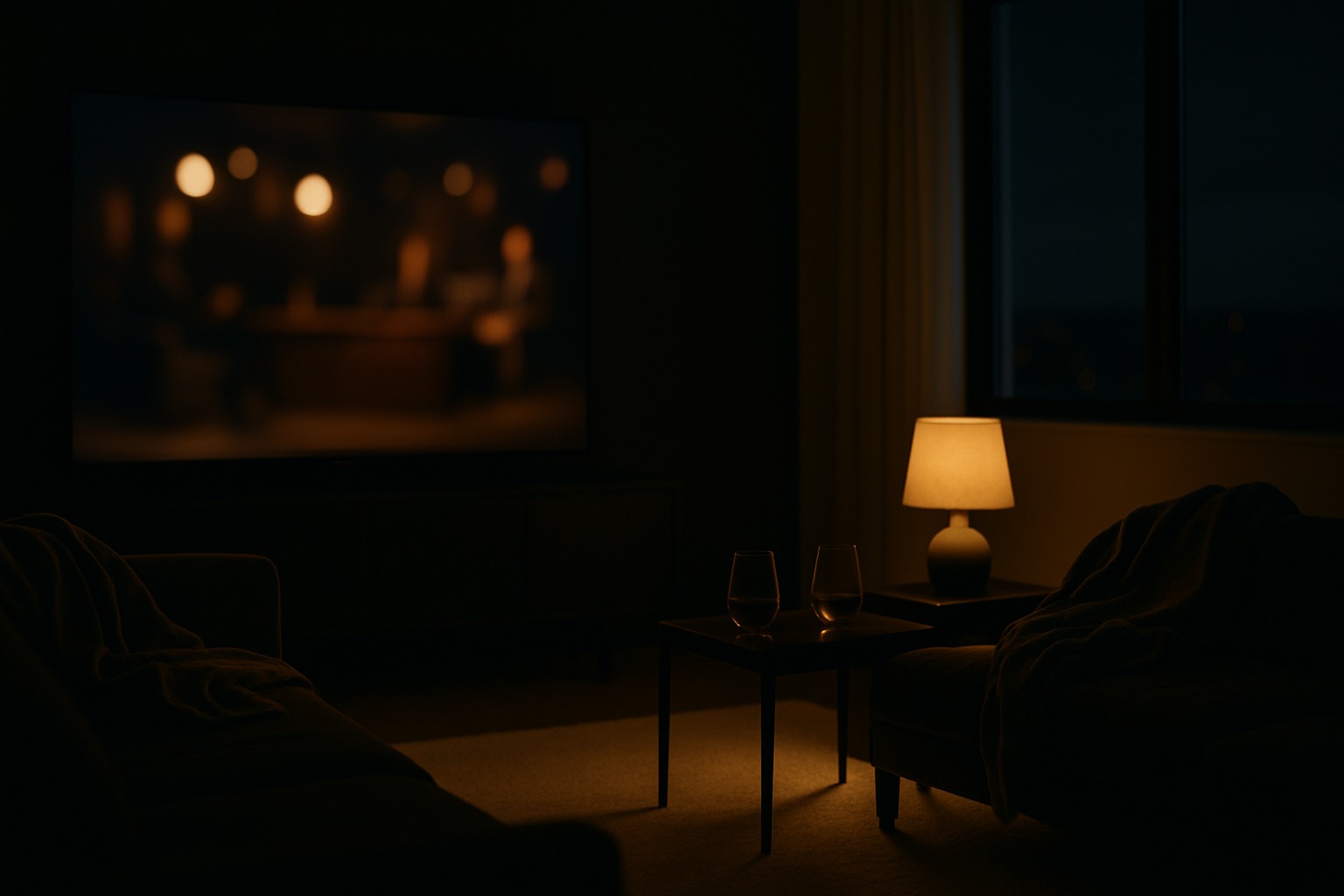
Most long-distance couples we have watched fight over their TV ritual eventually arrive at the same realisation: reality TV is the easiest format to share across a screen. Nobody is locked into subtitles. Nobody is missing key plot beats while reaching for a glass of water. You can pause mid-rose-ceremony to argue about whether Hannah's tears are real, and the show actively rewards the conversation. For couples who burned out on prestige drama or anime, the move to reality TV often feels like a relief.
Then Love Is Blind drops six episodes at midnight on a Wednesday and the entire ritual collapses inside forty-eight hours. The group chat from your three best friends spoils episode four before you have started episode three. Your partner watches one "just to see what happens" and then has to fake reactions through the whole next session. The format is easier in the moment and harder over the season, and almost nobody plans for the second part. We have run hundreds of WatchNest rooms for couples watching dating shows, competition shows, and the long-tail of Bachelor spinoffs, and the friction is consistent enough to write down.
Reality TV really is the easiest long-distance co-watch — until you pick wrong
The case for reality TV as a long-distance format is genuinely strong. Episodes are usually 40 to 60 minutes. The pacing is built around recap moments, so a missed line is rarely a missed plot. The whole point of the show is to watch other people behave badly and talk about it with someone — which is the exact thing you cannot do alone on your couch. Reality TV does not punish a co-watch with a partner over video. It thrives on it.
The mistake almost every couple makes is treating reality TV as one category. It is not. There are at least four formats hiding under that label, and each of them has a different shape that either fits or breaks long-distance viewing:
Weekly broadcast reality. The Bachelor, The Bachelorette, Survivor, Love Island UK. One episode per week, sometimes two, with a culture of live discourse. The week between episodes is half the experience. Long-distance friendly because the slot is already on the calendar.
Netflix batch dating shows. Love Is Blind, Perfect Match, Too Hot to Handle, Age of Attraction. Six to ten episodes drop in one or two waves over a few weeks. Long-distance hostile by default because both partners have full access the second the batch lands.
Competition reality. Drag Race, Top Chef, MasterChef, The Traitors. Weekly drops, lower spoiler stakes than dating shows, easier on the schedule. The single most forgiving genre for inconsistent couples.
Slow reality. 90 Day Fiancé, Vanderpump, The Real Housewives. Massive episode counts. You are never going to finish a Housewives season together unless you are unusually disciplined. Treat it like a background hobby, not a ritual.
If you pick the wrong format for your distance and schedule, no amount of sync software fixes the underlying mismatch. A couple eight hours apart trying to keep up with The Bachelor live every Monday will fail within four weeks. A couple in the same time zone watching one Drag Race episode per week for a season will sail.
The Netflix drop problem (and why it is worse than weekly TV)
The single most common reason reality TV rituals break for long-distance couples is the Netflix batch drop. Love Is Blind dropping six episodes at 12:01am Pacific on a Wednesday is not a passive event. The algorithm pushes them. Your group chats explode. TikTok is full of unmarked spoilers within three hours. The temptation to "just watch the first one" is overwhelming, and once one of you has watched one, the ritual is asymmetrical in a way that does not recover gracefully.
The fixes that actually hold:
- Agree on the release-window window. Both of you watch nothing until the canonical session, whatever it is. Wednesday night your time, Thursday morning theirs, whatever fits. The rule is not "we will both watch by Friday." The rule is "neither of us touches it before the session."
- Mute the show across every platform you use. Twitter and TikTok now have keyword muting that works. Use it. The show's name plus the season number plus the names of the most-discussed cast members. Five minutes of setup buys you four weeks of peace.
- Skip the recap content. The Tudum companion content, the YouTube reaction channels, the morning-after podcasts — these are full of casual spoilers framed as analysis. Listen to them after, not during, the season.
We have written before about stream cheating in long-distance couples, and reality TV is where it gets the sharpest. The shame of having watched ahead is also social — once one of you has seen the episode where the famous betrayal happens, you cannot un-see it, and you cannot fake the reaction. The trust hit is real even on a show neither of you cares about that deeply.
The group-chat trap
The other half of the reality TV problem is the group chat. Long-distance couples have to opt out of three or four conversations they would normally enjoy, because the people they normally watch with are not on their schedule. Your sister has watched all six episodes by Thursday morning. Your best friend is texting unhinged screenshots at lunch. Your work Slack has a #reality-tv channel that is faster than the show itself.
What works is a slightly explicit social move: tell the people in your closest chats that you are watching it with your partner on a schedule, and ask them to put new-episode reactions in a separate thread, behind a spoiler tag, or save them for after the weekend. You do not need to give a long explanation. "Watching with N on Saturdays, please tag spoilers" is enough. Real friends will respect this. The people who do not are usually the people you should mute the show keywords from anyway.
The trickier conversation is with the friend who watches the same show with you over video and is now also watching it with their own partner. The polite move is to keep the social co-watch on its own schedule, separate from the couple co-watch. Watching the same show twice — once with your partner, once with friends — sounds tiring but is actually how most reality TV obsessives in 2026 do it, and the two viewings genuinely feel different.
Pick the show you will actually finish together
The reality-TV equivalent of a couple starting Mr. Sunshine and burning out at episode four is picking up Real Housewives of Salt Lake City season one in May. Episode counts matter. Cultural reference density matters. How much pre-existing world knowledge the show assumes matters even more.
A few rules that hold up across the couples we have watched:
Pick the current cultural moment. A show that is airing right now, with active discourse, is dramatically more fun than catching up on a finished season. The discourse is the point. Love Is Blind season ten while it is dropping, The Bachelor during its live run, The Traitors US between January and March. Live shows give you a reason to protect the slot on your calendar.
Pick a show with a season arc, not a series mythology. Survivor season 50 is a perfect first co-watch even if neither of you has seen the first 49 seasons. Real Housewives of New York is a 15-year continuous soap and is brutal to drop into. Self-contained seasons make catch-up after a missed week trivial.
Pick a show where you can argue about strategy or judgment, not characters. Competition shows give you a low-stakes thing to react to together. Dating shows are higher-stakes but more fun if you both share roughly the same instinct about people. Watching Love Is Blind with a partner whose taste in cast members is exactly opposite to yours is fun for two episodes and exhausting by episode five.
Trade the choice each season. They picked The Traitors. You pick Top Chef. Without alternation, one of you starts to feel they are watching the other person's show, and the ritual erodes. This is the same dynamic that breaks down in couples who cannot agree on what to watch, only louder because reality TV is the most opinion-driven genre.
Talking during is the point — design the call for it
This is the single biggest structural difference between watching reality TV with your partner and watching K-drama or anime. With prestige formats, the conversation lives in the gaps. With reality TV, the conversation is the show. Designing your call setup around silence is wrong here.
What actually works:
- Open mic, not push-to-talk. The whole point of a Bachelor episode is hearing your partner gasp when the producers cut to a confessional. If you are pressing a button to talk, you miss the timing.
- Side-by-side video, not picture-in-picture floating over the show. You want to see their face while a rose ceremony plays. The reactions are half the episode. A camera that is actually visible is non-negotiable.
- One drink, not a whole bottle. Reality TV invites drinking and the couples who lean too hard into "wine night" lose the second-half conversation. Sober enough to remember the cast names by episode three is the right calibration.
Most of the sync tools out there can do basic chat. The ones that can do real video calls with both faces on the screen at watchable size are a smaller list — we have a comparison of the best ones here — and for reality TV specifically, the call quality matters more than for any other genre.
The spoiler problem is bigger than you think
Spoilers in reality TV are different from spoilers in scripted shows. The mechanics are different. Twitter does not say "the killer is John" — it says "I cannot believe what just happened in the pod with the chocolate." That kind of vague-but-specific spoiler poisons the surprise without giving you the actual information, which is somehow worse than a clean spoiler.
The defense is layered, not perfect:
- Mute the show keywords across socials for the active drop window.
- Avoid YouTube unless you are deliberately watching reaction content together.
- Avoid the podcast apps' "new episodes" tab if you listen to any podcast that covers the show.
- Tell your closest friends and the most-engaged co-workers about the schedule.
A real benefit of running the co-watch in a sync tool rather than just texting "press play" — beyond keeping the playback aligned — is that the side chat keeps the reactions inside the call, where the spoiler dynamic is one-to-one and inside the couple, not broadcast. We see couples accidentally tweet a reaction that spoils the episode for someone else, and then feel bad about it. The room chat is a private container for the same impulse.
Time zones, episode length, and the schedule that holds
Reality TV episodes are kinder to time zones than K-drama in one specific way: a 45-minute Bachelor episode is half the length of a Korean prestige hour, and a single sitting fits inside almost any evening window. The math on a six-hour gap is workable. The math on a twelve-hour gap is harder but not absurd if you are willing to take one of your weekend mornings for it.
If you are eight or more hours apart, the patterns from the time zone playbook apply directly. Pick the slot in the slower partner's calendar. Make it weekly. For Netflix batch drops, split the batch over two or three sessions rather than trying to power through in one.
What it costs, and whether it is worth it
The base cost is whatever you are already paying for Netflix, Disney+, Prime, or your Bachelor-via-Hulu workaround. The co-watch layer is free on most tools' entry tier, with paid plans unlocking longer sessions and higher-quality video calls — full pricing on our pricing page. For a couple watching one or two reality shows on a weekly cadence, the free tier is usually enough. For couples running multiple shows and pulling in a third friend for The Bachelor specifically, the paid tier earns its place quickly.
What you actually get, when this works, is a shared running joke that exists nowhere else. Six months in, you will both remember the cast member whose name you cannot pronounce, the producer choice that made you scream, the unhinged outfit from episode three of the second season. That layer of inside-references is the thing a long-distance relationship is constantly trying to manufacture and most of the time fails to. Reality TV is unusually good at it, which is the actual reason couples keep coming back to the genre despite all of the friction above.
FAQ
Can you do a Love Is Blind watch party with a long-distance partner? Yes — the Netflix-native Tudum watch party features are mostly for live discussion around the reunion, not the regular episode drops. For private co-watching, a sync tool that supports Netflix (we cover the main options here) plus a video call is the standard setup. Treat each drop as a multi-session event rather than a single sitting.
How do you watch The Bachelor together long distance if one of you does not have Hulu? Either share an account if you trust each other on billing, or one of you pays for the season and the other pays the tab on the next subscription you both want. The "everyone pays for their own subs" rule that works for single people often becomes silly for committed long-distance couples, where the bill is meaningfully smaller than the friction.
Is reality TV easier than scripted shows for new long-distance couples? Usually yes. The format tolerates conversation, the episodes are short enough to fit any time zone, and the stakes per missed episode are low. Start with a competition show like Top Chef or The Traitors before moving to dating shows, which are more polarising and reveal taste differences faster.
What do you do about spoilers from group chats? Tell the chat your schedule, mute the show name across socials during the drop window, and accept that you will catch one or two spoilers per season. The goal is to reduce the surface area, not eliminate it.
Is it weird to watch reality TV with my partner on video? It would be slightly weird in 2016. It is the default in 2026. The couples we see in long-distance relationships now treat a weekly reality TV co-watch the same way they treat a weekly dinner — a recurring ritual that is on the calendar and that they do not skip. There is nothing strange about it. The only thing that is strange is doing it alone when you do not have to.
Start your private watch party
Free for two viewers, premium for groups. Synced playback, chat, video calls — all in one extension.
Read next

How to Watch K-Dramas Together Long Distance (2026 Guide)
Weekly Viki drops, 16-episode commitments, time zones, and the subtitle problem. The honest 2026 guide to watching K-dramas with your partner long distance.

How to Watch Anime Long Distance With Your Partner in 2026
Subs vs dubs, 24-episode commitments, picking a show when your tastes diverge. The honest 2026 guide to watching anime with your partner long distance.