How to Watch Movies Together in a Long-Distance Relationship (The Honest 2026 Guide)
A practical, no-fluff guide to long-distance movie nights — what actually works in 2026, the tools worth your time, and rituals couples swear by.
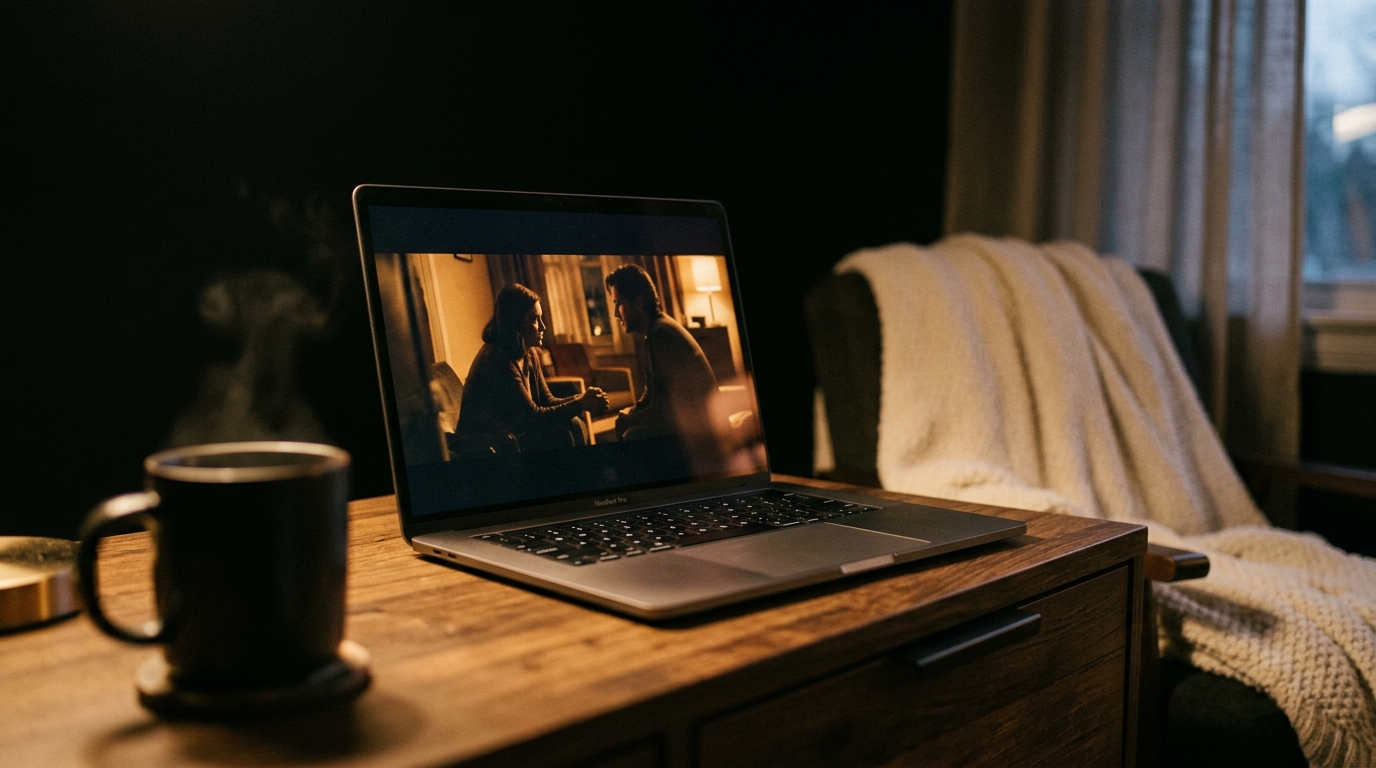
If you've ever counted down to "press play in 3, 2, 1" with a partner three time zones away, you already know the truth: long-distance movie night is a relationship workhorse. It's the closest thing to actually being on a couch together. It also goes wrong in oddly specific ways that nobody warns you about — laggy sync, awkward chat windows, a partner who falls asleep mid-film while their camera judges you.
This guide is the honest version. No "10 tools you must try" listicle. Just what actually works in 2026, written by people who run a watch-party product and watch a lot of films at a distance.
Why long-distance movie nights matter more than people admit
When couples talk about long-distance, the conversation usually drifts to phone calls and trips. Movie night gets dismissed as "just streaming." That's a mistake.
Watching a film together is one of the few rituals where you don't have to perform. You don't have to fill silences. You're sharing the same emotional arc in real time — a horror jump scare, a slow montage, a line that hits unexpectedly. That shared reaction is what closeness actually is, stripped of all the small talk.
The problem isn't the idea. It's the execution. A movie night that takes 25 minutes to start, drifts out of sync after 20 minutes, and leaves one of you watching alone — that's the relationship killer. Not distance.
The four things that actually break a long-distance movie night
Before getting to tools, name the failure modes. Most "watch together" tools die on at least two of these.
Sync drift. Two streams started at the same time will not stay aligned. Buffering, ad breaks, regional differences in Netflix's CDN — within an hour you can be 30 seconds apart, which is enough that one of you reacts to a plot twist before it lands for the other.
Friction at the start. If pressing play together requires a Discord call, a screen share, a browser extension, a paid subscription on top of streaming, and a chat app, you'll skip movie night on bad days. Friction wins by default.
The "where do I look" problem. People underestimate this. If your partner is on FaceTime in a separate window, the screen, the phone, and the laptop all compete for your eyes. You end up watching neither the film nor each other.
The post-movie void. The film ends, the call drops, and you're alone in your room at 11pm. The transition matters. The best long-distance movie nights have a small ritual on either side — a quick "what did you think" before bed, even five minutes.
If a tool or routine fixes one of these without breaking the others, it's worth keeping. Most don't.
What changed in 2026 (and what to stop doing)
A lot of Teleparty advice from 2020-2022 is now stale. Three things shifted:
- Streaming services cracked down on shared-screen tools. Discord screen-share of Netflix shows a black screen because of DRM. If your routine still relies on screen sharing, switch.
- Better sync engines exist. Modern watch-party extensions don't just press play together — they continuously correct drift by adjusting playback rate by tiny amounts (97-103%) so neither of you notices a re-sync. This is the single biggest comfort upgrade.
- Camera-in-the-overlay is the move. Putting your partner's face in a small dock on the same screen as the film solves the "where do I look" problem. Phone-on-the-nightstand FaceTime is officially over.
If you're still doing simultaneous-press-play with a separate FaceTime call, you're using 2018 advice. There's a reason it always feels janky.
A long-distance movie night setup that actually works
Here's the routine couples that do this weekly tend to land on. It's boring, which is the point — boring routines run reliably.
Pick the film together, in advance. Even a 10-minute back-and-forth on Sunday afternoon for "what are we watching this week?" beats deciding live. The decision is the part where most movie nights die — too many options, neither of you wants to pick. Pre-deciding gives you something to look forward to and removes friction.
Use one tool that does sync, chat, and camera. Not three. The whole point of the routine is to lower activation energy. WatchNest does this in a single Chrome extension overlay — the catch is, anything that does the same is fine. The bar is: one click to join, one click to start, one window to look at.
Headphones, both of you. This sounds obvious. It's not. Speaker audio creates a half-second echo loop on the call that makes voices feel weird and far. Headphones make the audio sit inside the experience instead of bouncing through the room.
Five-minute decompress at the end. Don't drop the call the second the credits roll. Even a quick "okay, that scene with the letter — what do you think they meant?" turns it from "we both watched a thing" into "we shared something". This is also when the best inside jokes get born.
Long-distance movie night ideas couples come back to
If you've done the basic Netflix-on-Friday routine and want to escalate, these are the formats people actually repeat.
The blind pick
One of you picks a film the other has never heard of, no premise, no trailer, no opinions. Just press play. The tension of "do I trust your taste" turns the first 20 minutes into a tiny social experiment.
Theme nights
Pick a director, a year, a country, or a genre you don't usually watch — three Wong Kar-wai films across three weeks, or a 90s romantic comedies streak. The constraint makes choosing easier and turns movie night into a small project.
Comfort rewatches
Specifically your partner's comfort rewatch, not yours. Watching them watch their favourite film — clocking the moments they mouth along to dialogue — is one of the most underrated forms of intimacy.
The "we got home from work" night
Both of you get home, both of you sit on your respective couches, both of you press play within 10 minutes. No setup, no special occasion, no pre-discussion. The point is the same-time-ness. It's closer to "we live together" than any structured date.
Synced rewatch with audio commentary
Rewatching a film one of you knows well, but with the other person doing live commentary. Niche, but the couples who do this are extremely loyal to it.
Tools worth your time (and the ones that aren't)
This part will be short because the landscape is small.
Watch-party browser extensions are the right shape of tool. They run in the same browser tab as your stream, so there's no DRM weirdness, and the good ones include sync, chat, and an optional camera overlay. WatchNest is one of these. So is Teleparty (Netflix Party rebrand). The difference is mostly polish — calmer UI, better small-group experience, optional camera in WatchNest's case.
Discord screen-share works for things that aren't DRM-protected (your own files, YouTube, Twitch). It does not work for Netflix, Disney+, or Prime Video — you'll see a black square where the video should be.
Streaming services' built-in "watch with friends" features come and go. Disney+ had GroupWatch, Hulu had Watch Party, Amazon has Prime Video Watch Party — quality and availability varies by region and tier. None of them solve the "I want chat + camera + sync in one place" problem in 2026.
FaceTime SharePlay is the closest Apple-native option, but it's iPhone-to-iPhone, doesn't work on Windows or Android, and you still have the "screen vs phone" eye-juggling problem.
If you want one recommendation: a watch-party browser extension with optional camera, on a laptop, both of you with headphones. That's the setup that 90% of long-distance couples eventually settle on.
Common questions, real answers
Will the sync stay perfect for a 2-hour film? Not perfect, but unnoticeable. Modern watch-party tools correct drift continuously. Expect to be within half a second for the entire film — never enough that you'd notice unless you were measuring.
Do we both need to pay for Netflix? Yes, in 2026. Streaming services have largely closed the "one account, multiple households" loophole. Both partners need their own subscription on the same service to watch in sync.
What if our internet speeds are very different? Most tools sync to the slower stream by default — meaning the partner with worse internet sets the pace. If one of you is on a poor connection, drop the resolution to 720p on both ends. The sync experience matters more than 4K.
Can we do this on phones? Technically yes, but every couple who does it weekly ends up on laptops. The screen real estate matters. Phone-only movie nights stay short and infrequent.
How do we deal with time zones? Pick a recurring weekly slot that hurts both of you a little, not just one. "Saturday at 9pm yours / 1pm mine" works because it's slightly inconvenient for both — which means it gets respected. Slots that are easy for one and brutal for the other get cancelled.
The relationship case for making it a ritual
The thing nobody tells you about long-distance is that the relationship runs on rituals more than on calls. Random calls are good. Scheduled rituals are what make the months feel structured instead of endless.
A weekly movie night that survives travel, work crunches, bad weeks — that's an anchor. It also gives you a shared library of references over time. Six months in, "remember the scene in the kitchen from that French film?" becomes a private language only the two of you speak.
If you're new to long-distance, start with one movie night a week. Same day, same approximate time. Pick the film at the start of the week. Use one tool. End with five minutes of debrief. Do that for two months and the difference in how connected the relationship feels is genuinely measurable.
If you want to give WatchNest a try for it, the extension is free for two viewers — synced playback, in-overlay chat, and an optional camera dock so you can actually see your partner during the film. We built it specifically for couples doing this, which is why the pricing starts free for two.
Whatever tool you pick, the routine is the thing that matters. The routine is what closes the distance.
Start your private watch party
Free for two viewers, premium for groups. Synced playback, chat, video calls — all in one extension.
Read next
How to Watch Reality TV Together Long Distance in 2026
Love Is Blind drops, Bachelor watch parties, group-chat spoilers, and the dating-show ritual that actually holds. Honest field notes for long-distance couples.
How to Watch K-Dramas Together Long Distance (2026 Guide)
Weekly Viki drops, 16-episode commitments, time zones, and the subtitle problem. The honest 2026 guide to watching K-dramas with your partner long distance.